
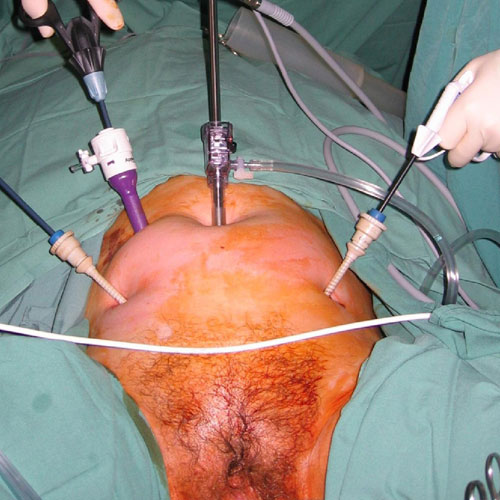
A laparoscopic hysterectomy is a minimally invasive "keyhole" surgery to remove the uterus and cervix (total) or just the uterus (subtotal) through small abdominal incisions, often using specialized cameras and instruments. It offers faster recovery (usually 2–6 weeks), less pain, and shorter hospital stays compared to open surgery.
Procedure Details :
Technique : Several small (5-12 mm) incisions are made in the abdomen, and carbon dioxide gas is used to expand the abdomen for better visibility.
Method : The surgeon uses a laparoscope (camera) to view pelvic organs on a monitor and removes the uterus through the vagina or in small pieces through the incisions.
Duration : Often takes 1–4 hours.
Types : Total laparoscopic hysterectomy (uterus and cervix removed) or alongside removal of tubes and ovaries (oophorectomy).
Recovery and Benefits :
Hospital Stay : Usually 0–1 night (often outpatient).
Recovery Time : Most women return to light activities in 1-2 weeks, with full recovery in 2-6 weeks.
Advantages : Reduced blood loss, less post-operative pain, and reduced risk of infection compared to abdominal hysterectomy.
What is a laparoscopic hysterectomy for?
A laparoscopic hysterectomy is a minimally invasive surgical procedure designed to remove the uterus, and sometimes surrounding structures, using small incisions, a camera, and specialized instruments. Its primary purpose is to treat gynecological conditions like fibroids, endometriosis, and cancer with less pain, reduced blood loss, and faster recovery than traditional open surgery.
How does a woman's body change after a hysterectomy?
A hysterectomy is the surgical removal of the uterus, which permanently stops menstrual periods and makes pregnancy impossible. It often relieves chronic pain or heavy bleeding but may cause immediate surgical menopause-including hot flashes and vaginal dryness-if ovaries are also removed. The procedure requires a recovery period and may involve temporary bowel/bladder changes.
Why would a man get a laparoscopic hysterectomy?
Laparoscopic hysterectomy is one of the surgical techniques used to remove the uterus. For trans men or non-binary people assigned female at birth, hysterectomy can be part of gender-affirming surgical options.
What happens to your body after a laparoscopic hysterectomy?
The tiredness may last for several weeks after surgery. And you also may have light vaginal bleeding for a few weeks. It's important to avoid lifting while you are recovering so that you can heal. It may take about 4 to 6 weeks to fully recover.
Risks and Considerations :
Potential Complications : Although rare, risks include bleeding, infection, blood clots, or injury to surrounding organs (bladder/ureter).
Menopause : Removal of both ovaries will lead to immediate menopause, regardless of age.
Aftercare : Avoid lifting heavy objects (> 5kg) and sexual intercourse during the initial recovery period.


Services Offered


Treatments

About Gynaecology

Chambers


Gallery
You can get all kind of photo & videos that related to Gynaecologist & Obstetrician, Laparoscopic, Infertility related Disease.

FAQ
You can get all kind of question and answer that related to Gynaecologist & Obstetrician, Laparoscopic, Infertility related Disease.

Contact
By simply registering with your details you can reach to the doctors and book appointments in advance.

Feedback
By simply registering with your details you can reach to the doctors and enquiry in advance.


MBBS. MD (O & G), Consultant Gynaecologist & Obstetrician, Laparoscopic Surgeon, Infertility Specialist
Contact Person : Dr. (Mrs.) Chaitali Roy
CD-19, Saltlake, Sector - I,
Near City Center - I,
Kolkata: 700 064, West Bengal, India.